
Retention vs. Detention Ponds: What’s the Difference?
If you’ve driven through a residential development, commercial property, or construction site, you’ve probably seen a large basin designed to collect and manage stormwater. But not every stormwater pond serves the same purpose.
Two common types are retention ponds and detention ponds.
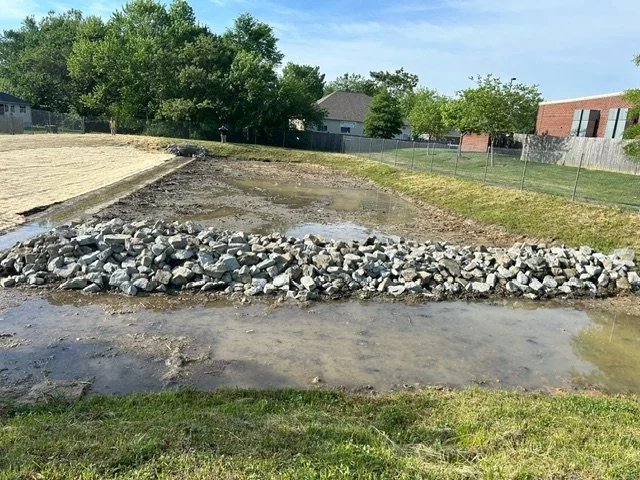
Detention Pond
Instead of maintaining a permanent pool, a detention basin is designed to temporarily store stormwater and release it at a controlled rate.
Detention Ponds: Designed to Temporarily Store Water
A detention pond works differently.
Instead of maintaining a permanent pool, a detention basin is designed to temporarily store stormwater and release it at a controlled rate.
During a significant rain event, water flows into the basin and the water level rises. The basin provides temporary storage, allowing the water to leave the property more slowly.
Once the stormwater has been released, a detention basin may return to a mostly dry condition.
That's why you may see what looks like a large grassy depression beside a road, subdivision, or commercial property. It may actually be an important part of the site's stormwater management system.
While the names are similar, the way they manage water is different, and understanding that difference can help property owners, developers, and contractors better understand what is happening on their site.
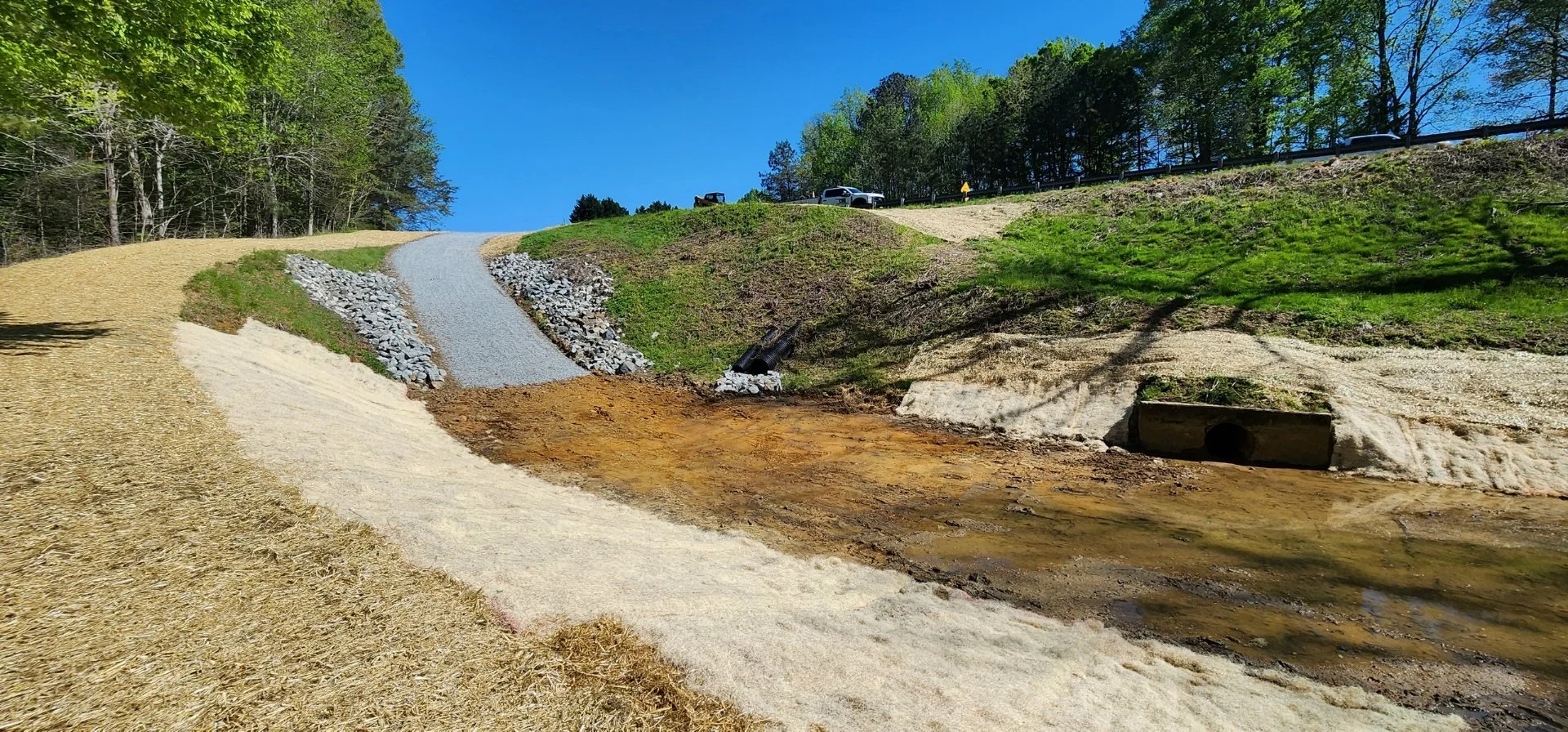
Retention Pond: A retention pond is designed to maintain a permanent pool of water.
Retention Ponds: Designed to Hold Water
A retention pond is designed to maintain a permanent pool of water.
Stormwater runoff enters the pond and is stored in the basin. Depending on the design, water may be released through an outlet structure, infiltrate into the surrounding soil, or remain in the permanent pool.
These ponds are often recognizable because they typically have water in them even when there hasn't been a recent storm.
Retention ponds can be found around:
Residential developments
Commercial properties
Industrial sites
Large developments
Properties requiring long-term stormwater management
A properly designed retention pond does more than simply hold water. The basin, slopes, outlet structures, and surrounding drainage features all work together to manage runoff.
The Easy Way to Remember It
Retention = water is retained.
Detention = water is detained temporarily.
The important distinction is whether the basin is designed to maintain a permanent pool or temporarily store runoff before releasing it.
It's More Than Just a Pond
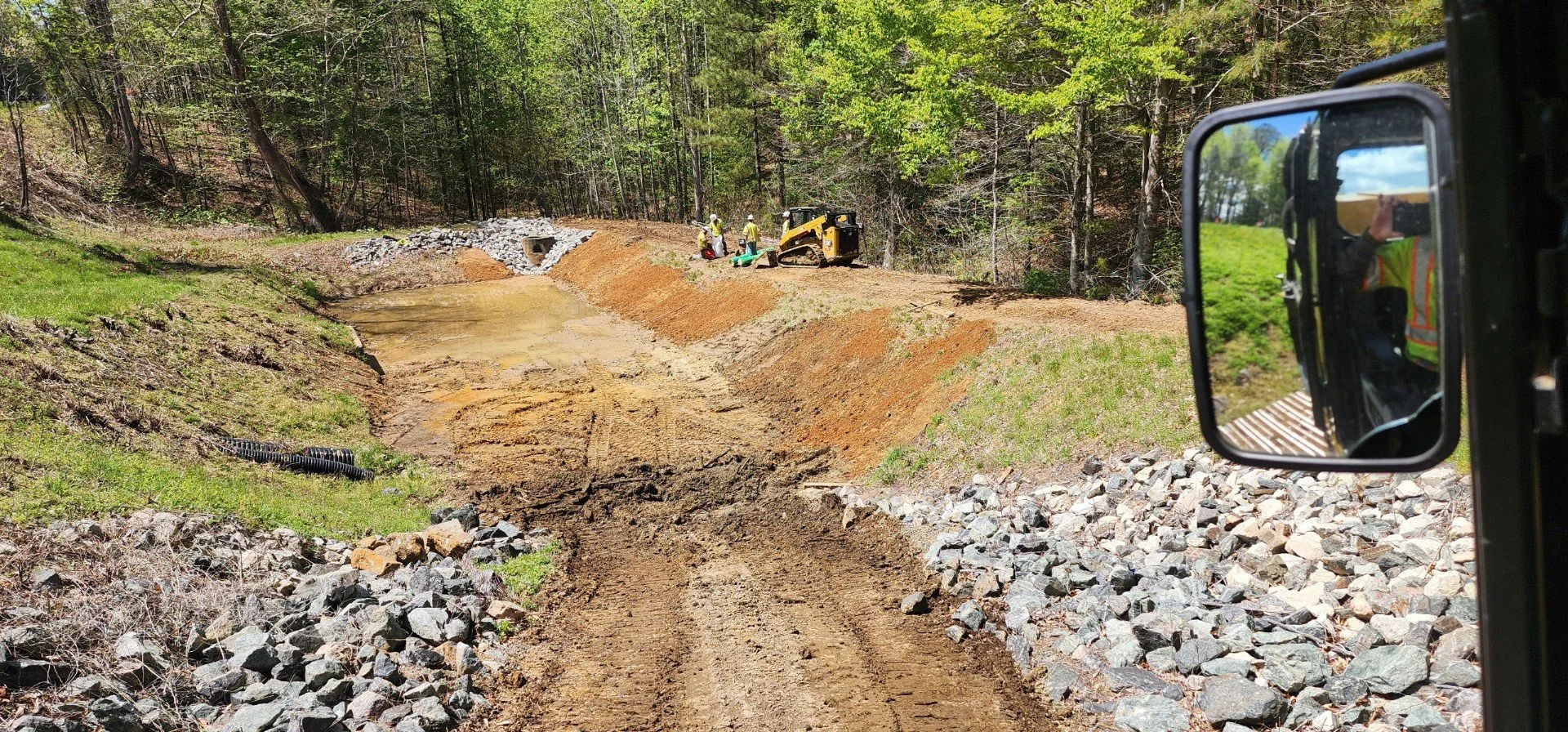
From an excavation standpoint, stormwater management takes much more than simply digging a hole.
The grade of the surrounding property, basin slopes, drainage paths, outlet structures, pipe systems, erosion-control measures, and stabilization all have to work together.
That's where experienced excavation contractors come in.
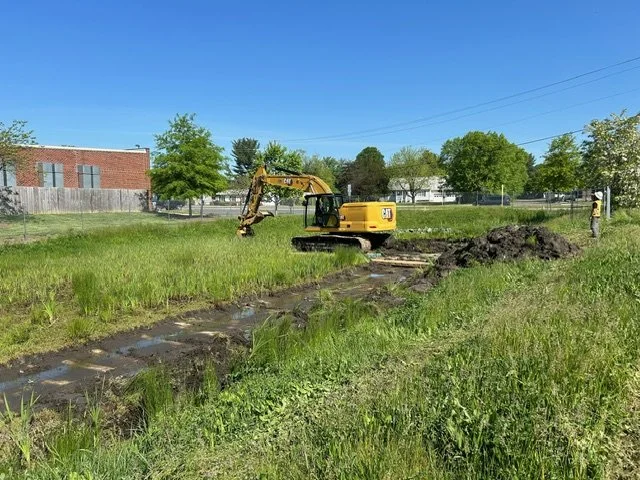
At David L. Brooks Hauling & Excavating, LLC, our crews have experience with drainage improvements, pond work, erosion control, excavation, grading, riprap, spillways, and stormwater infrastructure.
Brooks Hauling & Excavating Can Help
Stormwater management is an important part of keeping properties, roads, developments, and drainage systems functioning properly.
Whether a project involves pond excavation, pond repairs, grading, drainage improvements, erosion control, riprap installation, spillway work, sediment removal, or other excavation needs, having the right equipment and an experienced crew makes a difference.
At Brooks Hauling & Excavating, we bring the equipment and experience needed to tackle a wide range of excavation and stormwater projects throughout Virginia and surrounding areas.
Have a pond, drainage, or erosion-control project that needs attention?
Contact Brooks Hauling & Excavating to discuss your project and determine the best way to complete the work.